
Bridge Inspection with Autonomous Drones
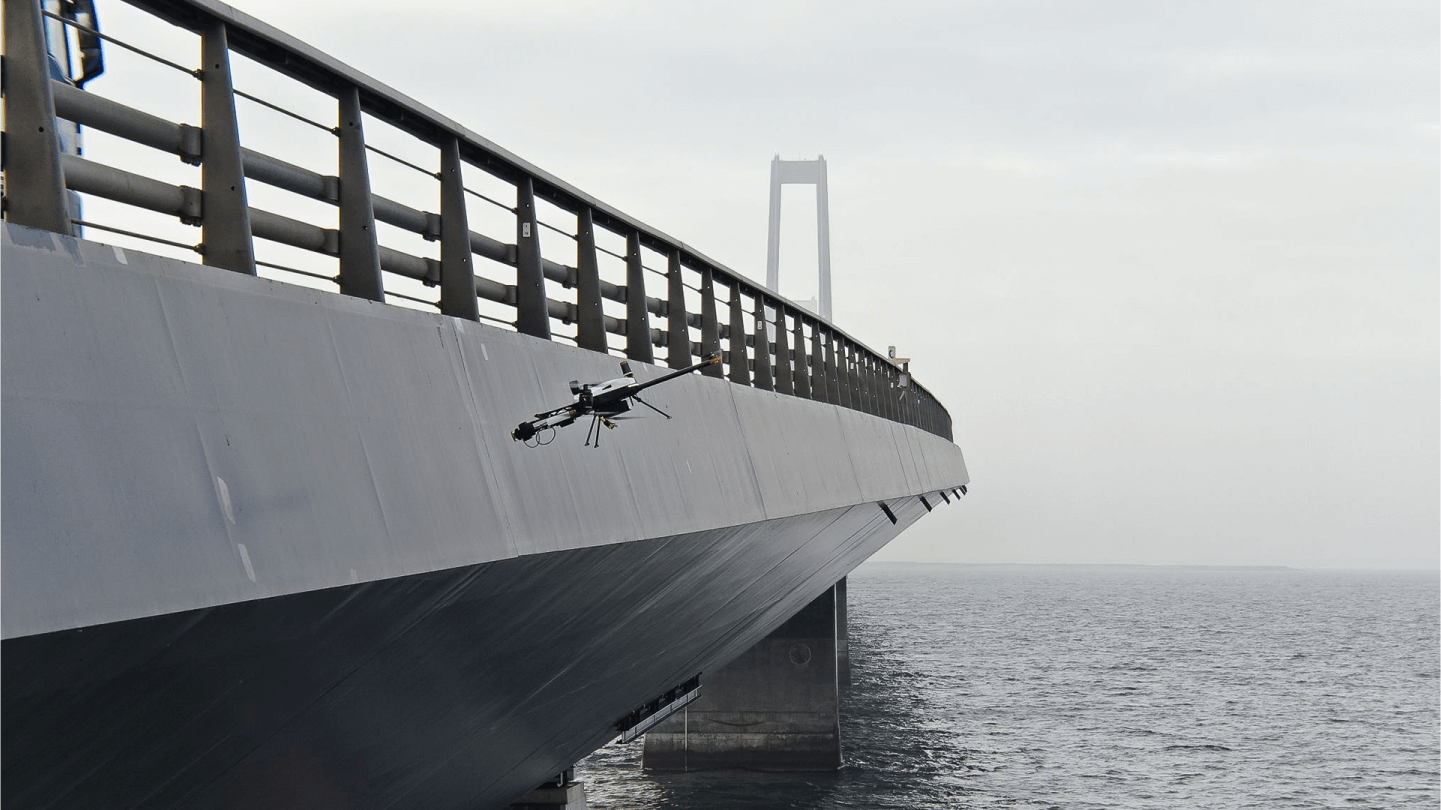
Inspect hard-to-reach bridge structures with greater flexibility and control. IntelliFleye’s autonomous navigation technology is designed to support drone operations in challenging environments where GNSS signals may be weak or unavailable, including beneath bridge decks and around structural components.
Why Bridge Inspection Is Challenging
Conventional Drones Struggle with Bridge Inspection
Limited or Unavailable GNSS Signals
Bridge decks, concrete structures, and surrounding infrastructure can obstruct satellite signals, making reliable positioning difficult in areas where close inspection is needed.
Difficult-to-Access Structures
Undersides, support piers, bearings, and other structural components can be difficult and hazardous for inspection teams to reach.
The Need for Repeatable Inspections
Bridge condition monitoring requires inspections to be carried out regularly. Consistent flight paths and repeatable data collection can help engineers compare changes over time.
How IntelliFleye helps
Autonomous Flight Where GNSS Is Missing
Navigation Without GNSS
Visual navigation and specialised sensors support positioning when satellite signals are weak or unavailable, helping drones operate in challenging areas beneath bridge structures.
Autonomous Path Planning and Obstacle Avoidance
BionicSense supports flight-path planning and obstacle avoidance to help the drone navigate around structural elements such as piers, beams, and cables.
Ground-Based Mission Planning
Operators can configure waypoints and flight trajectories through the ground control station before the mission, supporting a more organised inspection workflow.
What you can find
A Low-Cost Way To Monitor Your Bridges
Bridge Damage
Quickly identify damage on the structure.
Performance Problems
Spot problems that affect how the bridge performs.
Capacity Decline
Track changes over time with repeat inspections.
Drones are easy to deploy and cost-effective in maintenance projects, so engineers can monitor bridges regularly.
How it works
From Plan To Result In Three Steps
Plan
Set waypoints and the flight trajectory in the ground control station.
Fly
The drone follows the route on its own and avoids obstacles.
Review
Engineers review the inspection footage and plan maintenance.
Bridge inspection video
Which product fits
Choose How You Want To Fly
Complete System
BionicSense
Visual self-driving system with 3D mapping, path planning and obstacle avoidance. Triple-redundant IMU, barometer and compass.
Navigation Sensor
BionicNavi BN-100
Adds accurate position data to your own drone, with and without GPS. 265 g, works with PX4 and ArduPilot.
Frequently asked questions (FAQ)
Can a drone inspect a bridge without GPS?
Yes. With suitable navigation technology, a drone can operate in environments where GNSS signals are weak or unavailable. IntelliFleye’s BionicSense uses visual navigation and specialised sensors to support autonomous flight in challenging environments, including beneath bridge structures.
What can drones inspect on a bridge?
Drones can capture close-range images and video of accessible bridge components, including concrete surfaces, beams, piers, joints and undersides. The collected data can help engineers identify visible damage and areas requiring further assessment.
Do I need to buy a drone from IntelliFleye?
No. If your drone has a PX4 or ArduPilot flight controller, BionicNavi BN-100 can give it accurate position data. IntelliFleye also offers the S400 series drones.
How do I get a quote?
Use the Talk to Sales button or email Business@intellifleye.com and tell us about your bridge.
Tell us about your bridge
Tell us about your site and your mission. Our team will recommend the right model.